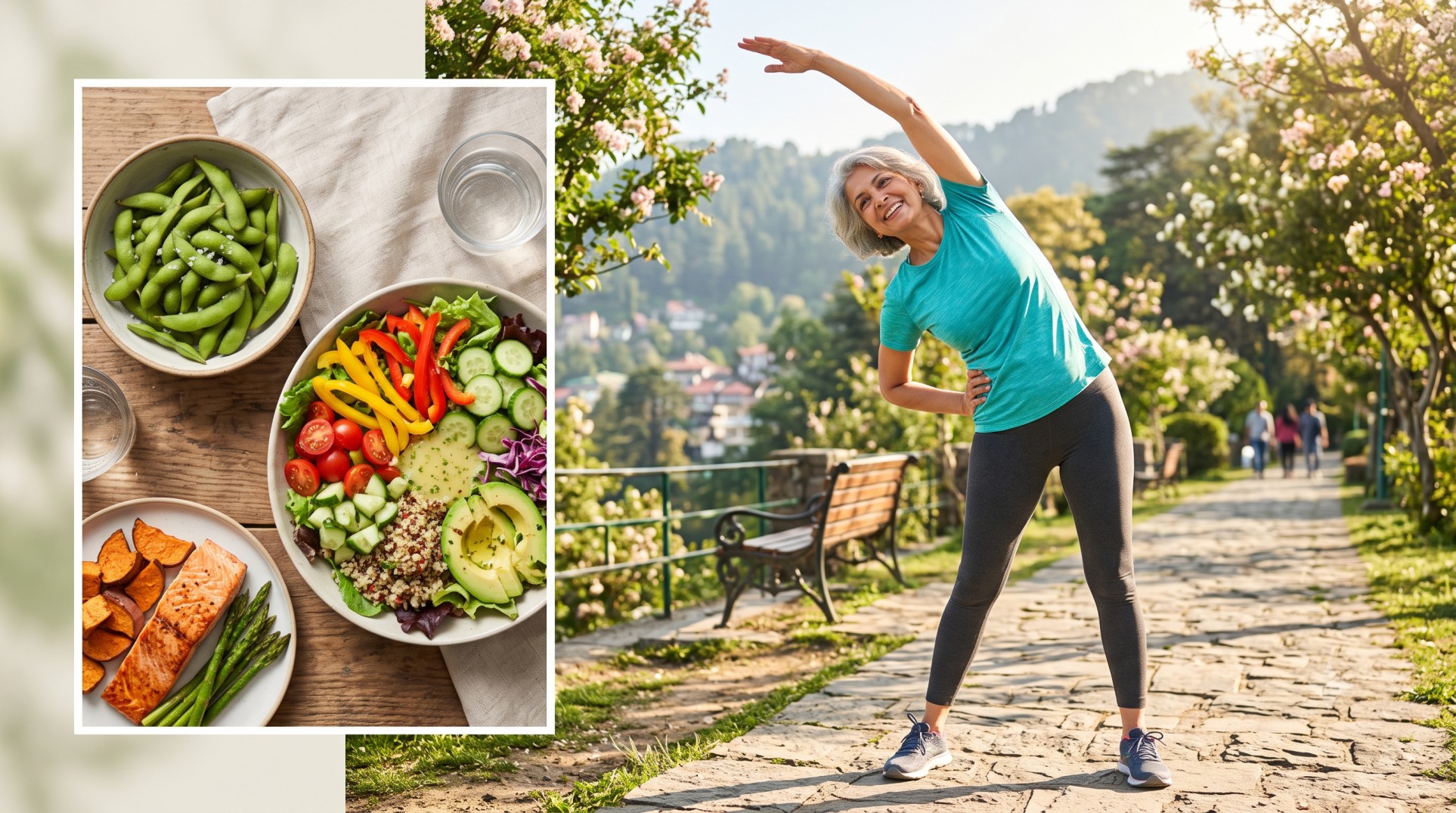

Takishima Mika’s routine combines fermented foods, protein-rich meals and frequent movement. Here’s what science says about the habits behind her active lifestyle.
Growing older does not automatically mean becoming inactive or losing the ability to move well.
Takishima Mika, widely known as “Takimika,” became famous in Japan for continuing to teach fitness well into her 90s. Her daily routine includes regular exercise, traditional Japanese foods such as natto, fish and tofu, and a habit of staying physically engaged throughout the day.
Her story is interesting not because one food or exercise explains her longevity, but because it highlights several habits that researchers have repeatedly associated with healthy aging: regular physical activity, adequate protein, nutrient-dense foods and less sedentary time.
Video: A look at Takishima Mika’s diet and active lifestyle.
Here are some of the most useful lessons.
1. Natto Is a Nutrient-Dense Fermented Food
One of the foods Takishima has regularly included in her diet is natto, a traditional Japanese food made by fermenting soybeans with Bacillus subtilis.
Natto is particularly notable for its vitamin K content. The National Institutes of Health lists natto as an especially rich dietary source of menaquinones, including MK-7. A 3-ounce serving is listed at about 850 micrograms of vitamin K, although the amount can vary by product.
Vitamin K is involved in normal blood clotting and bone metabolism. It also participates in the activation of proteins such as osteocalcin and matrix Gla-protein. However, that does not mean eating natto has been proven to prevent osteoporosis or arterial calcification. Evidence regarding vitamin K supplementation and specific disease outcomes remains mixed.
What about nattokinase?
Natto also contains nattokinase, an enzyme produced during fermentation.
Laboratory and clinical research has investigated nattokinase for possible effects on blood pressure, blood clotting and cardiovascular risk factors. But the evidence is not strong enough to describe natto or nattokinase as a proven treatment for preventing blood clots, stroke or heart disease.
A 2023 systematic review of randomized trials found some reductions in blood pressure with nattokinase supplementation, but the researchers emphasized the small number of studies and limitations of the available evidence.
Another randomized clinical trial found that three years of nattokinase supplementation did not significantly slow progression of subclinical atherosclerosis in healthy, low-risk participants.
The takeaway: natto can be a nutritious addition to a balanced diet, but it should not be viewed as a replacement for prescribed medications or medical treatment.
2. Fermented Foods May Support a Diverse Diet
Takishima’s eating pattern also includes other traditional fermented foods, including kimchi and fermented pickles. Her reported breakfast has included natto, eggs, tofu, fish and fermented foods.
Fermented foods have attracted considerable scientific interest because they can contain live microorganisms and fermentation-derived compounds.
In a randomized 17-week dietary study published in Cell, researchers found that a diet high in fermented foods increased gut microbiome diversity and reduced several markers of inflammation in healthy adults.
That does not mean every fermented food produces the same effect, however. Products differ substantially in their microorganisms, fermentation methods, salt content and nutritional composition.
For everyday eating, fermented foods can be one part of a varied diet that also contains vegetables, fruits, whole grains, legumes, nuts, seeds and other minimally processed foods.
3. Protein Becomes Increasingly Important With Age
One of the most practical lessons from healthy aging is the importance of maintaining muscle mass and physical function.
Muscle loss becomes more common with advancing age, and older adults may have a reduced anabolic response to dietary protein. That makes both adequate protein intake and resistance or other appropriate exercise important components of maintaining strength.
The international PROT-AGE Study Group has recommended that healthy adults over 65 generally consume around 1.0–1.2 grams of protein per kilogram of body weight per day, with higher amounts potentially appropriate for people who exercise or are dealing with illness—while noting that people with certain kidney conditions may require individualized advice.
Takishima’s reported meals provide several protein sources, including fish, tofu, eggs and natto.
Think beyond a single “superfood”
There is no need to rely on one particular protein.
Older adults can obtain protein from foods such as:
- Fish and seafood
- Eggs
- Yogurt and other dairy foods
- Tofu and soy foods
- Beans and lentils
- Poultry
- Nuts and seeds
The bigger objective is maintaining sufficient nutrition while supporting muscle and physical function.
4. Staying Active Outside the Gym Matters
Perhaps the most interesting part of Takishima’s routine is that movement reportedly extends beyond her formal workouts.
According to a profile of her lifestyle, she maintains an upright posture while watching television and sometimes walks around her home on tiptoe. She also combines this with a demanding exercise routine.
These particular habits should not be treated as a proven longevity formula. But the broader principle—avoiding prolonged inactivity—is well supported.
The World Health Organization recommends that adults aged 65 and older accumulate at least 150 minutes of moderate-intensity aerobic activity each week, or an equivalent amount of vigorous activity. It also recommends muscle-strengthening activities on at least two days per week. Older adults with poor mobility should incorporate activities that improve balance and help prevent falls.
Physical activity does not have to mean spending an hour in a gym.
Walking, household activities, climbing stairs, gardening, dancing and structured exercise can all contribute to a more active lifestyle.
5. Balance, Strength and Mobility Are More Important Than a Number on the Scale
Takishima’s story also offers an important distinction between living longer and remaining functional.
For older adults, the ability to walk confidently, rise from a chair, carry everyday objects, maintain balance and perform routine activities independently can be more meaningful than body weight alone.
That is why modern physical-activity recommendations emphasize not only aerobic exercise but also muscle strengthening, balance and functional movement.
For someone who has been inactive, starting gradually is important. A demanding exercise program should not be copied simply because another person has successfully followed it for years.
6. What We Can Actually Learn From Takishima Mika
It is tempting to look at someone who remains remarkably active in their 90s and search for one secret ingredient.
But longevity rarely works that way.
Takishima’s reported routine combines several behaviors:
A varied diet: Fish, soy foods, fermented foods, vegetables and other nutrient-dense ingredients.
Adequate protein: Foods that can help support muscle maintenance as people age.
Regular exercise: Walking, jogging, fitness training and other physical activity.
Less sedentary time: Staying physically engaged even outside formal workouts.
Consistency: Perhaps the most important feature of all—the habits have become part of her normal lifestyle.
There is also an important scientific limitation: one person’s routine cannot demonstrate that those habits caused her exceptional longevity. Genetics, socioeconomic factors, medical care, environment, sleep, stress, lifelong activity and many other variables can influence healthy aging.
The Bigger Lesson About Healthy Aging
Takishima Mika’s story is inspiring, but the most useful lesson is not that natto, tiptoe walking or one particular Japanese food can keep someone young.
It is that physical function can remain a meaningful target throughout adulthood and later life.
A balanced diet, sufficient protein, regular physical activity, strength training, balance work and less sedentary time are all consistent with established healthy-aging recommendations.
You do not need to reproduce a 90-year-old fitness instructor’s demanding routine.
Instead, start with habits that are appropriate for your own age, fitness level and medical circumstances—and build consistency over time.
🩺 Editorial Note & Medical Disclaimer
This article is for educational and informational purposes only and is not a substitute for professional medical, nutritional or exercise advice. Talk with your doctor or a qualified healthcare professional before making major dietary or exercise changes, particularly if you have cardiovascular disease, mobility problems, osteoporosis, kidney disease or take medications that affect blood clotting.