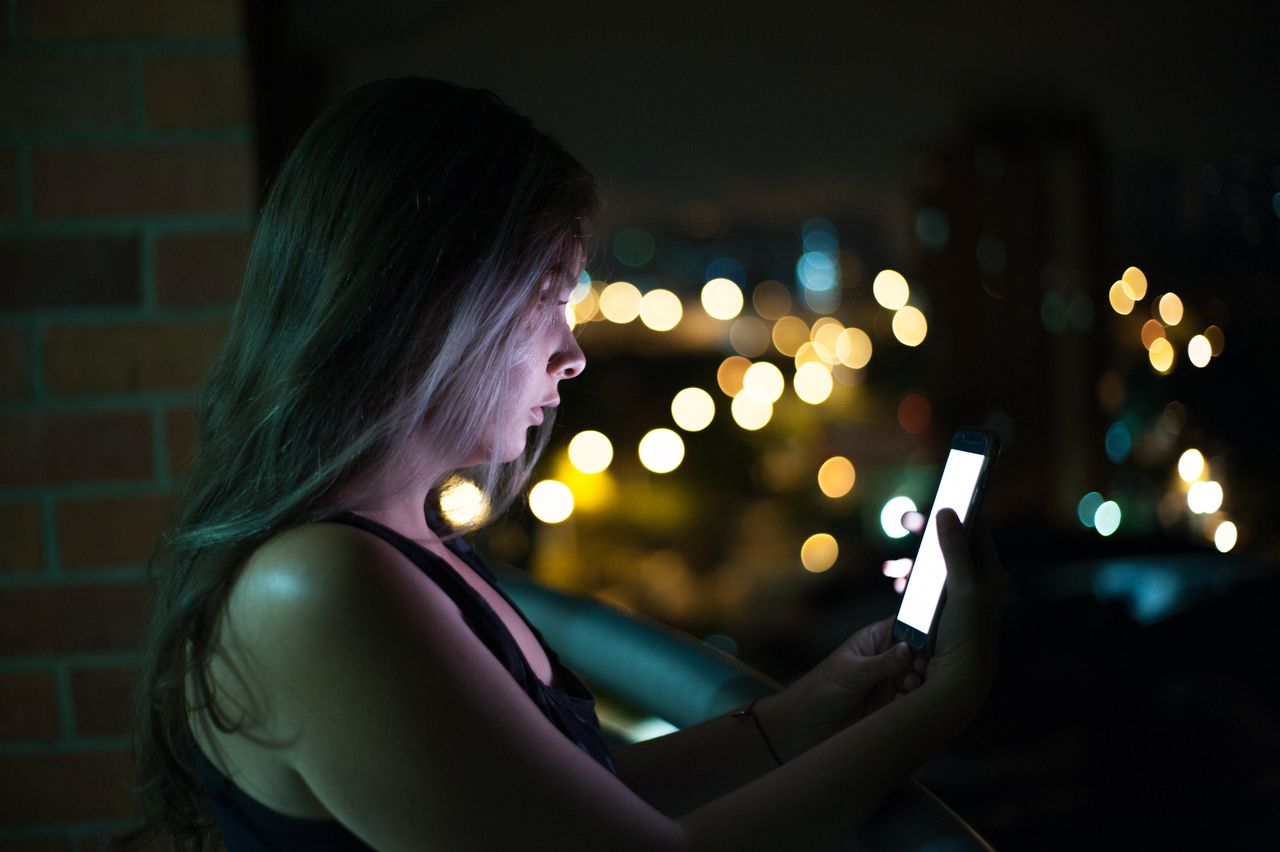

It is one of the most widespread habits of modern life. The bedroom lights are switched off, the house is silent, and you are lying under the covers with a glowing smartphone held inches from your face. What begins as an innocent promise to check “just one notification” frequently turns into an hour of scrolling, leaving your eyes feeling stinging, gritty, and blurred by the time you finally put the screen away.
This late-night routine has given rise to alarming headlines and viral warnings claiming that using smartphones in pitch darkness causes irreversible retinal burns, macular degeneration, and permanent vision loss.
However, clinical ophthalmology paints a much more nuanced picture.
Using your phone in the dark will not cause sudden blindness or melt your retina. Yet, dismissing the habit as completely benign overlooks a very real cascade of physiological strain. Staring at an intense, localized light source in an unlit room forces your visual system into an unnatural state of photopic contrast conflict, simultaneously degrading your tear film and derailing your master circadian clock.
Understanding the ocular physics and neurobiology of nighttime screen exposure bridges the gap between alarmist myths and real-world eye protection.
1. The Pupillary Dilemma: Extreme Contrast and Visual Fatigue
To understand why using a phone in the dark feels so uncomfortable, you must first examine how the human eye regulates incoming light.
Your pupils act as variable apertures. In bright daylight, the pupillary sphincter muscle constricts the pupil to limit photon entry, sharpening visual focus and protecting internal photoreceptors. In darkness, the pupillary dilator muscle opens the pupil wide (mydriasis) to gather as much ambient light as possible.
When you look at a bright smartphone screen in a pitch-black room, you create a profound physiological contradiction:
- The Environmental Signal: The surrounding darkness signals your autonomic nervous system to keep your pupils dilated.
- The Localized Photon Beam: A high-intensity beam of focused photons strikes your dilated pupil directly from a distance of just 8 to 12 inches.
This extreme luminance contrast—staring at a harsh light source against a zero-lux background—induces severe visual stress (photopic glare). Your iris muscles constantly fluctuate, trying to balance opposing commands, while your ciliary muscles remain locked in continuous accommodation to keep small digital fonts in sharp focus. The result is rapid-onset asthenopia (digital eye strain), manifesting as dull frontal headaches, brow ache, and temporary difficulty refocusing on distant objects.
2. The Spontaneous Blink Deficit: Why Your Eyes Feel Like Sandpaper
Have you ever wondered why your eyes feel scratchy, dry, or bloodshot after 20 minutes of late-night reading in bed? The cause is not chemical toxicity—it is a mechanical breakdown of your ocular surface lubrication.
Under normal, resting environmental conditions, a human blinks spontaneously 15 to 20 times per minute. Each blink performs vital micro-maintenance: it spreads a microscopically thin, tri-layered tear film (mucus, water, and lipids) across the cornea, nourishing avascular surface cells and washing away metabolic debris.
When concentrating intently on a digital screen, neurological blink frequency plummets:
- Cognitive processing and close visual tracking reduce spontaneous blinking by 50% to 60% (dropping down to roughly 5 to 7 blinks per minute).
- Furthermore, many of the blinks that do occur become incomplete, meaning the upper eyelid fails to make full contact with the lower lid margin.
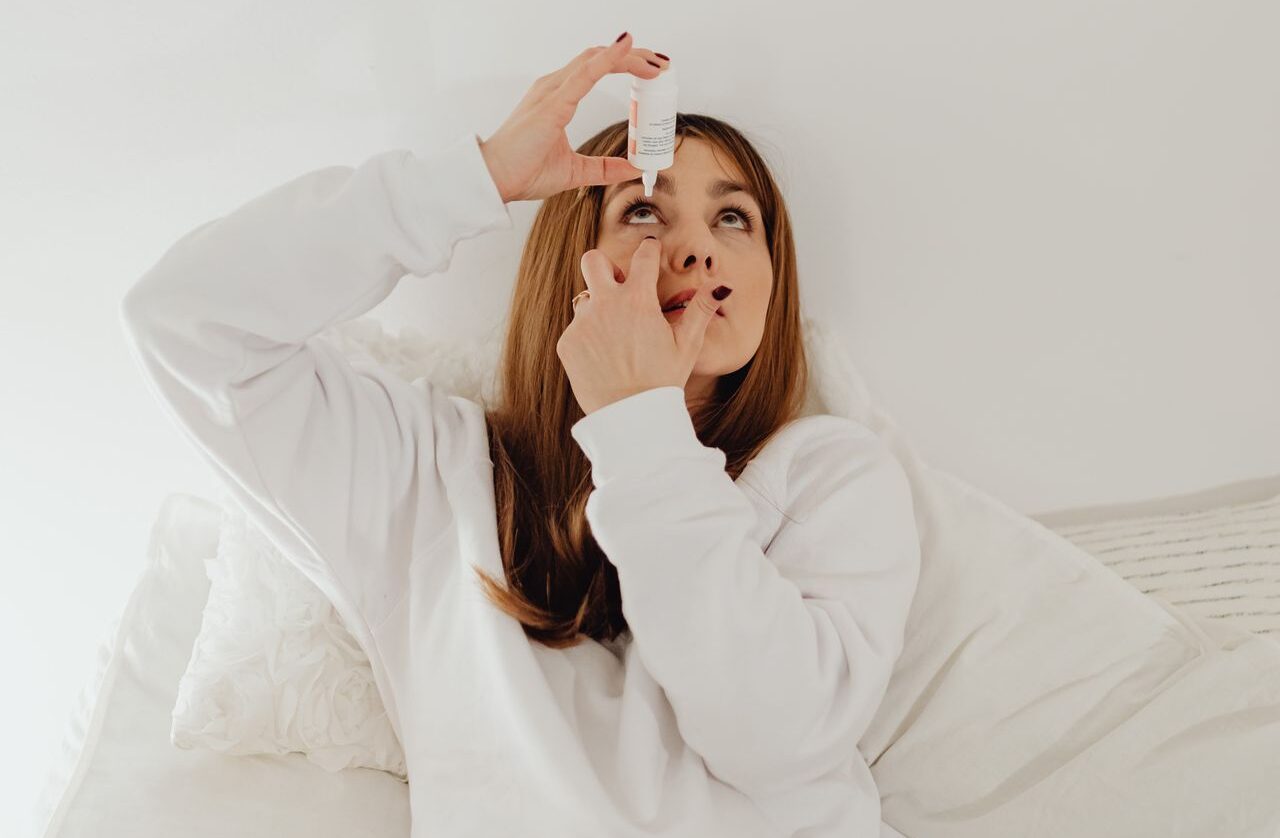
In the still, dry air of a bedroom, a suppressed blink rate causes rapid tear film break-up time (TFBUT). The watery layer of the tear film evaporates, leaving microscopic dry patches on the sensitive corneal epithelium. This triggers the burning, gritty, “sandpaper” sensation and prompts reflex lacrimation (watery, tearing eyes that paradoxically signal extreme surface dryness).
3. Melanopsin, Blue Wavelengths, and the Circadian Hijack
While your eyes may recover from ocular strain by morning, your endocrine system suffers a more insidious blow.
Smartphone displays emit high concentrations of short-wavelength blue light (roughly 450 to 480 nanometers). During evolutionary history, blue wavelengths were exclusively provided by the sun, serving as the biological cue to initiate daytime alertness, elevate cortisol, and support cognitive vigilance.
At the back of your retina sits a specialized group of non-visual cells called intrinsically photosensitive retinal ganglion cells (ipRGCs), which contain a light-sensitive photopigment called melanopsin:
- The Daylight Deception: Melanopsin is maximally sensitive to 460–480 nm blue light. When struck by screen photons in the dark, these cells send an immediate electrical signal through the retinohypothalamic tract straight to the suprachiasmatic nucleus (SCN)—the master circadian pacemaker in your hypothalamus.
- Melatonin Suppression: The SCN interprets this signal as noon daylight, commanding the pineal gland to halt the secretion of melatonin, the hormone necessary for lowering body temperature and initiating restorative slow-wave sleep.
By scrolling in the dark, you delay your natural sleep latency, fragment deep sleep architecture, and induce a state of social jetlag that impairs next-day focus, mood, and long-term metabolic health.
4. Separating Fact from Fiction: Does It Cause Macular Degeneration?
| The Popular Myth | The Clinical Science |
| “Late-night phone use directly causes macular degeneration.” | Current clinical literature and the American Academy of Ophthalmology (AAO) confirm that the photon emission from consumer electronic screens is far below the threshold required to induce thermal or photochemical retinal damage. |
| “Screen glare causes sudden, permanent blindness.” | Temporary vision blur upon looking away from a phone in the dark is caused by transient photoreceptor bleaching and tear film evaporation, not nerve death. It resolves once blinking and accommodation normalize. |
| “Blue light blocking glasses solve all sleep problems.” | While amber filters reduce blue wavelength stimulation, cognitive engagement, screen brightness, and proximity still trigger cortical arousal and suppress sleep onset. |
5. Practical Guidelines for Nighttime Screen Ergonomics
If completely banning devices from the bedroom is unrealistic, adopting evidence-based visual ergonomics will dramatically reduce asthenopia and protect your sleep cycle:
- Introduce Ambient Bias Lighting: Never look at a display in total pitch darkness. Turning on a dim bedside lamp or warm accent light raises ambient lux, softening the extreme luminance contrast and allowing your pupils to constrict naturally.
- Activate Scheduled Night Shift / Warm Modes: Configure your device to automatically shift color temperature to a warm, amber hue at sunset. Filtering short blue wavelengths reduces melanopsin activation, lessening sleep-delay signals.
- Practice the 20-20-20 Rule: For every 20 minutes of continuous screen use, look up at an object located at least 20 feet away for 20 seconds. This releases tension in the ciliary muscle and resets your focal accommodation.
- Conscious Full Blinking: Make an intentional effort to execute full, sweeping blinks while reading text, allowing meibomian glands along your eyelid margins to secrete the protective lipid layer that seals in moisture.
- Establish a 45-Minute Electronic Curfew: Disengage from near-point electronic screens 30 to 60 minutes before attempting to sleep. Replace digital scrolling with listening to audio, reading paper media under low warm light, or practicing gentle breathwork to allow melatonin secretion to rise organically.
Smartphones are powerful tools that enrich our lives, but human ocular anatomy was never designed to stare down an isolated beam of light in the dark. By managing contrast, protecting your tear film, and respecting your circadian biology, you can safeguard your vision and wake up truly refreshed.
🩺 Editorial Note & Medical Disclaimer
The information provided on healandnourish.com is intended for educational and informational purposes only and should not be construed as professional medical, optometric, or ophthalmological advice. If you experience persistent eye pain, severe visual changes, flashing lights, or chronic unresolving dryness, consult a licensed optometrist or ophthalmologist for a comprehensive clinical exam.
References & Clinical Resources
- American Academy of Ophthalmology (AAO): Review authoritative clinical perspectives on digital devices, blue light myths, and asthenopia prevention at the AAO Eye Health Information Center.
- Investigative Ophthalmology & Visual Science (IOVS): Explore peer-reviewed literature detailing spontaneous blink rate reduction, tear film break-up times, and digital eye strain via the IOVS Research Archive.
- Journal of Pineal Research: Read foundational chronobiological trials examining melanopsin, intrinsically photosensitive retinal ganglion cells (ipRGCs), and nighttime melatonin suppression through the Wiley Online Library.
- Harvard Health Publishing: Access clinical overviews outlining the systemic health impacts of blue light exposure, circadian disruption, and sleep hygiene from the Harvard Medical School Health Database.